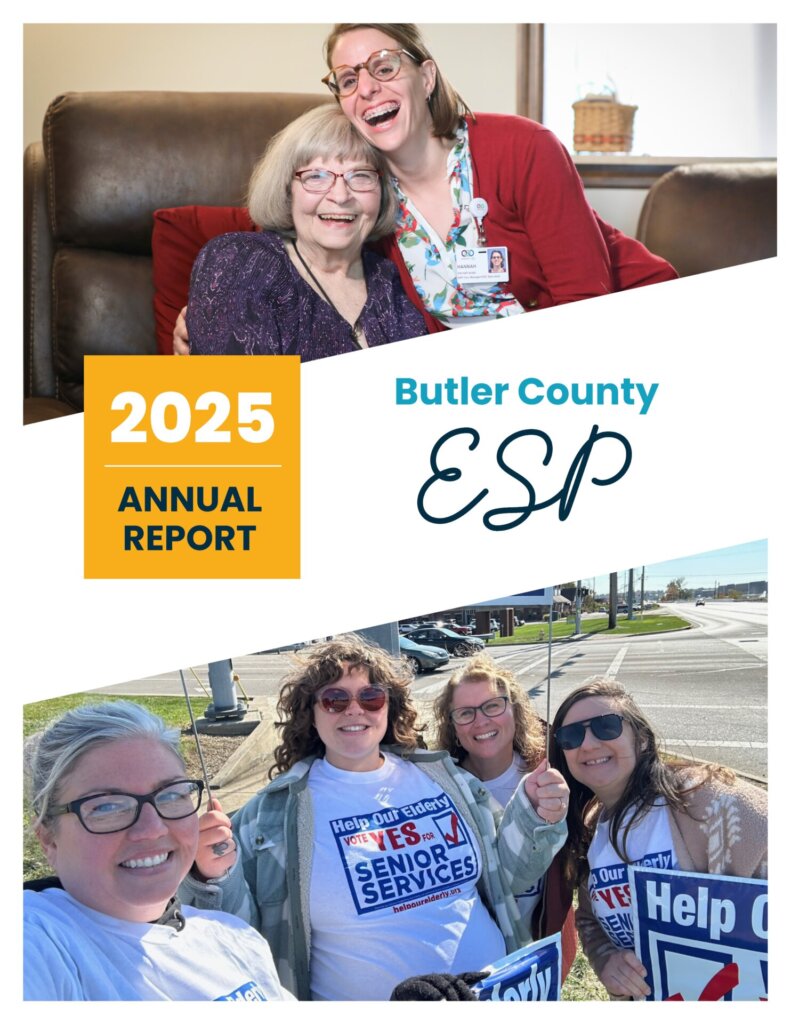
2025 Butler County ESP Annual Report
Below are the full success and client stories from the 2025 Butler County ESP Annual Report. These stories illustrate the impact ESP has on older adults and caregivers in the county.
Click here to view the 2025 annual report. To request a paper copy, email us.
Success Stories
Butler County’s senior services tax levy was approved by 55% of voters on Nov. 4, 2025. The levy was a renewal of the existing 1.3.mil levy and an increase of .7 mil. It was the first time in 20 years Butler County voters were asked to approve an increase in the senior services levy, despite 79% growth in the county’s 60 and older population during the same time period.
The combined levy will cost taxpayers an additional $24.50 per $100,000 of value, for a total cost of $50 per $100,000. The levy will generate $20.2 million annually.
“Everyone who is part of this program is grateful to the voters and taxpayers of Butler County,” said Ken Wilson, chief program officer at Council on Aging. Council on Aging administers the levy via a contract with Butler County Commissioners. “We knew it was a difficult time to ask voters for more money, but a renewal of the existing levy would have required drastic changes to the program, leaving a big gap between the number of people who need help and the number of people we are able to serve.”
The senior services levy provides more than 84% of funding for Butler County ESP, which helped 3,755 county residents age 60 and older remain safe and independent in their homes in 2025. ESP helps older adults with activities of daily living, including bathing, cleaning, cooking, and transportation, while also filling gaps in care that cannot be provided by family caregivers.
Since the levy’s last increase in 2005, the number of people age 85 and older in Butler County (those most likely to need care) has increased 52%. As the program’s administrator, Council on Aging has worked hard to keep costs down. Despite 62% inflation during this period, and rising program costs, the cost of care per client in ESP has increased only 18% (or $66) in 20 years.
Since February 2024, enrollment into ESP has been limited to focus on individuals most in need, including cancer and dialysis patients, adult protective cases and a few others. While this has helped to manage costs, it also means hundreds of people who would otherwise have been eligible and needed help were turned away during the past year.
With passage of the levy, enrollment restrictions have been lifted and ESP is beginning to close the gap between the needs of the community and program capacity. By 2030, ESP will be serving nearly 20% more people than it is today.
On Oct. 31, 2022, Susan’s life changed forever. That was the day she had major spinal surgery and woke up not able to feel her lower body. She was told she was a paraplegic. Through her tireless work and determination, along with support from Butler County Elderly Services Program (ESP), Susan is more independent than she ever thought she could be again.
A widow after 48 years of marriage, Susan lived alone in her single story, four bedroom home in Trenton. “I was scared to go home (from the hospital),” Susan said. “I was absolutely, flat-out terrified.”
A hospital social worker mentioned that ESP may be able to help. “The minute I knew there were many things I would need help with,” Susan said, “I was making lists and phone calls – and one was to ESP.”
When she made that call, her care manager, Hannah, developed a personalized care plan and Susan’s road to recovery truly began. ESP provided an emergency response system, which she wears every day and has helped her through two falls. The 30-ft wooden ramp ESP built for her replaced a costly, rented ramp and allows wheelchair entry into her home.
ESP also provided medical transportation. “I had a lot of transportation in the beginning – wound care appointments, physical therapy sessions and countless doctor visits,” Susan remembers. It is because of all those visits that Susan gained strength and is now able to drive on her own.
Even with an extensive support network that includes three adult children, four grandchildren and many friends, Susan felt like a burden. “I didn’t want them (my children) to be off work all the time to help me,” she said. “With ESP, they can go to work every day and they’re happy to know that I have resources other than the family.”
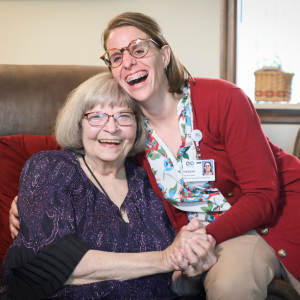
“I didn’t want them (my children) to be off work all the time to help me. With ESP, they can go to work every day and they’re happy to know that I have resources other than the family.”
A nurse by trade as well as an enthusiastic community theater seamstress, Susan has never hesitated to provide help to others, but accepting help was another thing altogether. “To let someone into my circle, especially a stranger, is hard for me,” Susan admits. “I don’t like to be dependent on anyone else. I am independent to an absurd degree. But she (Hannah) made me feel so comfortable about the whole thing. She has been a godsend.”
Hannah feels the same way: “Yes. She has come so far. Susan is one of the most inspirational clients I have had the privilege of working with.”
After two years of study and a successful pilot, Council on Aging (COA) introduced a new cost sharing model for Butler County ESP in 2025, with the goal of simplified predictable billing and payment for clients who live on a fixed income and better reflecting the financial realities of older adults.
Cost sharing has always been part of ESP, with 100% of cost share payments reinvested into the program, enabling it to serve more individuals. The cost sharing income is an important revenue source for the program to continue providing services to a growing population with increasing needs.
Under the previous model, cost sharing was calculated as a percentage of actual monthly service costs for each client. Income, and out of pocket medical expenses were included in the calculation. This resulted in fluctuating monthly bills for clients, driven largely by changes in service use and provider billing cycles.
The model also failed to consider key financial factors such as housing costs or liquid assets such as an IRA or mutual funds. Meanwhile, medical expenses were fully deductible, requiring extensive documentation even though only a small percentage of clients qualified for this deduction.
“These fluctuations and complexities made it hard for older adults on fixed incomes to plan,” said Ken Wilson, COA’s chief program officer. “It also created administrative challenges that took time away from client care.”
COA worked with the Livewell Collaborative to identify areas for improvement in the model. The new model incorporates streamlined steps and improved calculation methodology to ensure a proper cost share amount based on a client’s economic means to contribute towards the cost of the services they are receiving.
The new model replaces percentage-based monthly fluctuations with a flat, predictable monthly cost share amount set at enrollment. A new tool allows case managers to calculate the cost share in real time, reducing back and forth with clients.
The flat monthly payment is not based on the client receiving 100% of their scheduled services. Rather, it accounts for fluctuations that typically occur in a client’s care, such as missed appointments due to illness, hospitalizations or provider staffing.
If a client’s service needs, income or assets change significantly during the course of their enrollment, cost sharing payments are reevaluated to reflect those changes.
A pilot of the new cost sharing model demonstrated notable improvements. The percentage of clients contributing to cost share rose from 26% to 46%, while the average monthly amount collected increased from $56.15 to $114.46. Asset adjustments—which more accurately reflect ability to pay—increased from 2% to 11%.
At the same time, deductions for excessive medical and housing costs became more targeted, affecting only clients with significant burdens. Approximately 10% of applicants qualified for a housing hardship deduction, and 7% qualified for medical expense considerations under the pilot.
The new model provides:
- Predictable monthly costs for clients – a benefit for older adults living on fixed incomes – and higher cost share revenue to reinvest into ESP services, allowing the program to serve more people.
- More equitable treatment that accounts for housing costs, health expenses and financial resources.
- Reduced administrative burden for clients and staff through streamlined processes and fewer requests for medical receipts and documentation.
The new model went into effect in all counties on Oct. 1, 2025. More than 1,200 ESP clients across Butler, Hamilton, Warren and Clinton counties were transitioned to fixed cost share amounts based on their payment history.

An independent review of eligibility guidelines for Butler County ESP, conducted in August 2025 by the Scripps Gerontology Center at Miami University, found that 100% of enrolled individuals met eligibility guidelines for the program. The eligibility requirements for ESP are developed by the Butler County Board of County Commissioners in consultation with the Advisory Board.
To be eligible for the Butler County ESP, individuals must be residents of Butler County, over the age of 60 and have disabilities which require they receive assistance to perform basic tasks such as transferring, bathing or cleaning to remain in their home. In addition, clients must disclose income to determine if they have a monthly cost share to offset the cost of some of their services.
Eligibility is determined and confirmed through a home visit with a care manager. Eligibility screening and enrollment, as well as on going care management, is provided by LifeSpan – Community First Solutions.
The eligibility report can be viewed here.
As ESP’s administrator and the county’s Area Agency on Aging, Council on Aging is able to secure grant funding to preserve local tax dollars and serve more county residents. In 2025, grants from the McCullough Hyde Foundation and the Luther Charitable Foundation provided transitional care services and home modifications to eligible older adults in the county. The grants, totaling $60,000, will be spent between 2024-2026.
A $10,000 McCullough Hyde Foundation grant was awarded to COA in March 2024 and was completed in March 2025. The funding supported FastTrack Home, a program which provides transitional care services to older adults in Butler County following hospitalization. The goal of FastTrack Home is to provide supportive services and health coaching to support a successful recovery at home, preventing all-to-common hospital readmissions. More than 40 individuals received FastTrack Home services, including in-home care and home delivered meals, via the grant. The hospital readmission rate among participants was 5% — well below the national average for older adult readmissions.
A $50,000 grant from the H.B., E.W. & F.R. Luther Charitable Foundation enabled COA to provide home modifications for low-income older adults in Butler County. Home modifications including handrails, grab bars, ramps and stair lifts help to reduce fall risk, prevent costly institutional care and enable older adults to remain safe and independent in their homes. The grant was awarded in March 2025 and will continue through March 2026. As of this writing, 58 low-income older adults have received safety-related home modifications, directly increasing home accessibility and reducing environmental fall hazards.
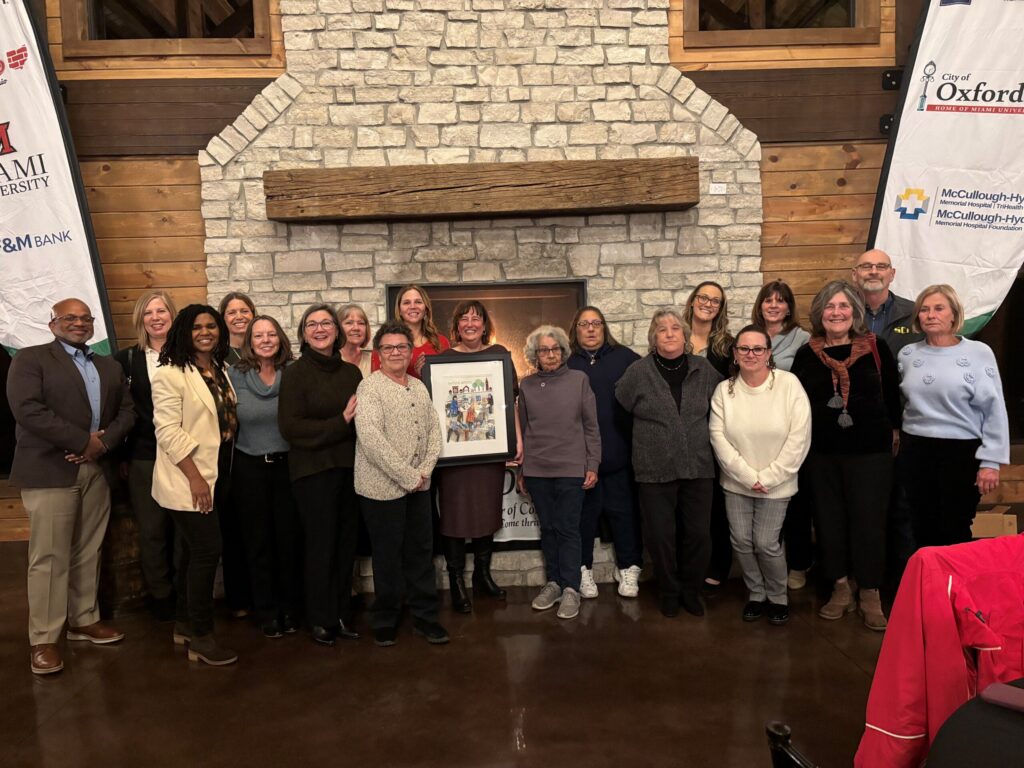
Oxford Senior Center was recognized as a 2024 Business of the Year by the Oxford Chamber of Commerce. A contracted service provider of Council on Aging (COA), they were nominated by COA in recognition of their vital role in the community providing essential services to the aging population and creating community involvement through local partnerships. The award was presented at an event in February 2025. Click here to read more.
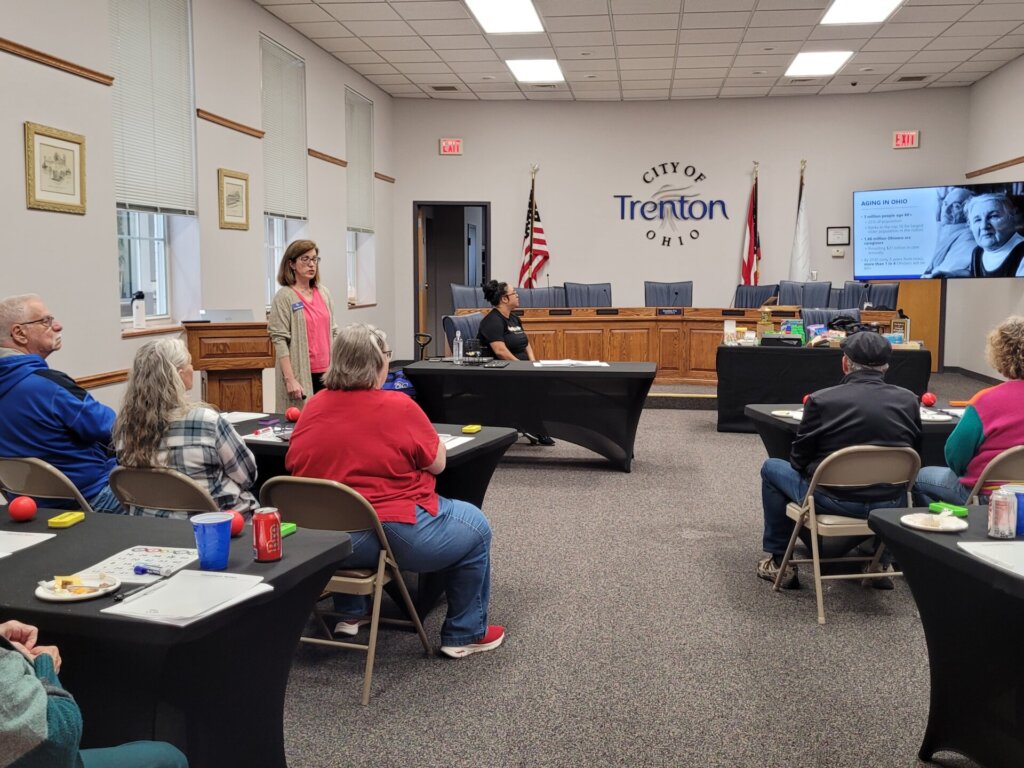
The saying “many hands make light work,” may never be truer than during a levy campaign. A dedicated group of volunteers spent months educating residents about ESP and the senior services levy, attending more than 30 community events and presenting at 20 local council meetings. Despite a challenging environment, volunteers were welcomed and found audiences eager to learn about the levy’s impact on their community.
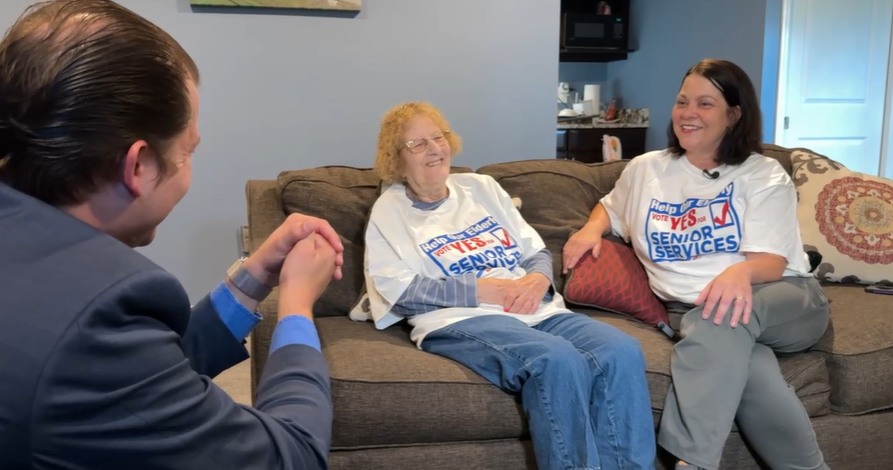
“For more than 10 years, the levy has helped me help my mother achieve her goal of staying out of a nursing home.” One of the best ways to help people understand a program’s impact is through personal stories like this one from Stacy, a West Chester caregiver. ESP clients, family caregivers and provider agency employees came forward in 2025 to share their perspectives on ESP, shedding light on the big and small ways the program impacts people’s lives. Stories were shared in the news, on social media and through the senior services levy campaign’s website.