2025 Warren County ESP Annual Report
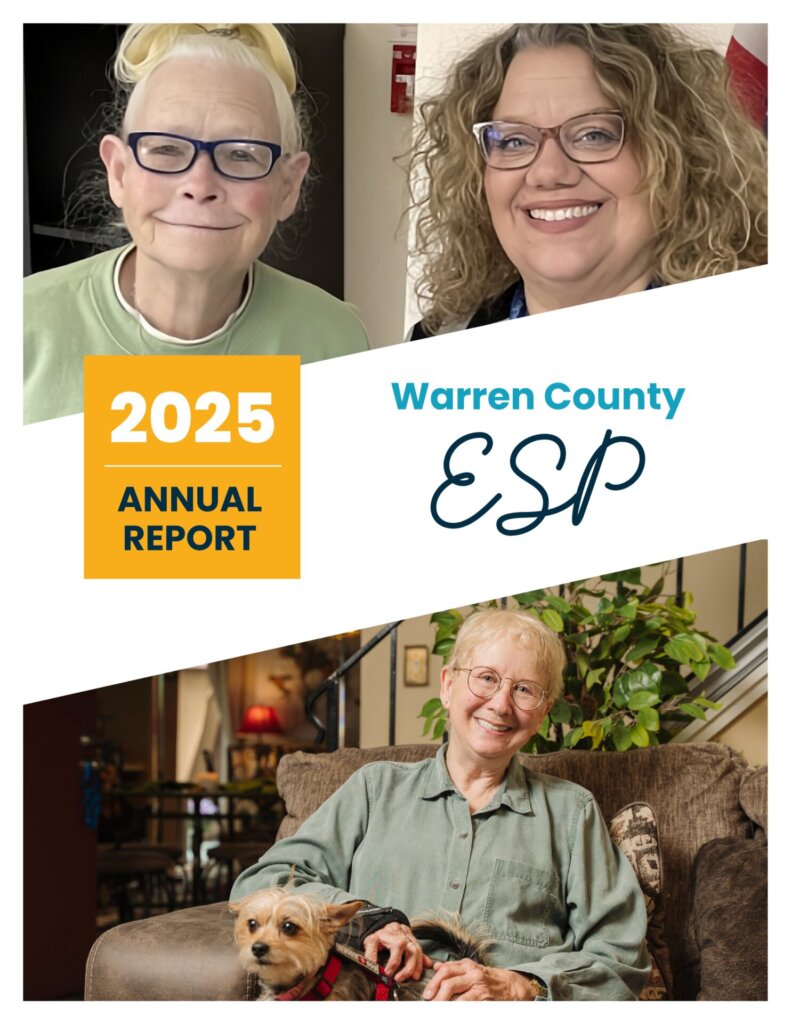
Below are the full success and client stories from the 2025 Warren County ESP Annual Report. These stories illustrate the impact ESP has on older adults and caregivers in the county.
Click here to view the 2025 annual report. To request a paper copy, email us.
Success Stories
As the country approaches a major demographic milestone – by 2034, older adults will outnumber children for the first time in U.S. history – Warren County is experiencing its own population shift.
While relatively young compared to neighboring counties, Warren County is home to more than 51,000 people aged 60 and older, and this number is rising.
More significant, however, is the growth of the 85 and older population –the group most likely to need help with daily activities. This population will more than double by 2050.
Warren County ESP, funded by the county’s senior services tax levy, helps eligible older adults in the county access basic services to support independent versus institutional living. For families and taxpayers, in-home care is far less expensive than nursing home care.
In 2024, the largest age group served by Warren County ESP was 80- to 89-year-olds, with more than half of all clients aged 80 or older. Another age group – centenarians (people age 100 and older) – has also been growing in recent years. Warren County ESP currently serves 15 clients aged 100 and older.
You might assume this group would require more services compared to younger age groups, but that’s not always the case, said Konnie Hansen, director of care management for Warren County ESP. Hansen and her staff shared their experience working with older clients and the consensus was that because of their longevity, many manage quite well on their own and are even healthier than younger clients.
“It is interesting as you would initially assume that this group has live-in caregivers, but surprisingly enough, many of our clients who are 100 and older live in subsidized [housing] independently,” Hansen said.
Hearing and vision impairments are the primary issues for this age group, and the reason they need assistance to live independently. Falls are also a concern. Help with housekeeping, personal care and transportation, as well as emergency response systems (to detect falls), can help address these barriers and are provided by ESP.
A unique aspect of this age group, however, is that most have experienced loss in their lives, outliving many of their family members, including their own children. ESP care managers report it is not uncommon for grandchildren to fill the role of caregiver because they are the next living relative.
“On the flip side,” said ESP Care Manger Barbara Root, “if [adult] children are the caregiver, a lot of them are in their 70s to 80s and need assistance for themselves, too.”
Hansen said ESP has not had to make any changes to support this growing group of centenarians. “We continue to review each barrier that arises for the support of the clients and caregivers,” she explained.
Hansen added that ESP staff, led by care manager Marcie Calvery, are making a special effort to acknowledge milestone birthdays for clients enrolled in the program by partnering with local Head Start classrooms to make birthday cards.
“Our hearts get tugged on more by our centenarians,” Hansen said. “The perseverance is amazing to see as they maintain their independence.”
To learn more about Warren County ESP, call (513) 695-2271.
Warren County ESP client, Marvel – affectionately known by all as Marvelous Marvel – lives in Maineville with Jeanette, her niece and caregiver. Marvel celebrated her 106th birthday in 2025.
A descendant of one of the region’s original settlers and Revolutionary War soldier, Jacob Rich, Marvel spent most of her life as a farmer, breeding blue-ribbon cows with her husband, Lonnie, and selling hay to area farmers.
A real-life Rosie the Riveter, Marvel worked at a factory along the Little Miami River during WWII assembling canned heat containers for the military.
Many things have changed in Marvel’s lifetime. For example, she paid 25 cents to get her first driver’s license, never had to take a driving test and continued driving into her nineties.
In fact, it was in her mid-90s when Marvel decided she should hang up her car keys. She reached out to the county’s transit system for help getting where she needed to go. Soon after, she fell and broke her hip, got connected to Warren County ESP and began receiving home-delivered meals. Later, ESP provided an emergency response system and home care assistance (an aide to help with housekeeping, personal care and respite).
With support from ESP, Marvel continued to live alone until age 101 when Jeanette moved in with her. It was during the pandemic and Marvel had been diagnosed with kidney cancer.
The two have made good use of their time together, writing and publishing a book, Hunting Wildflowers, which is based on Marvel’s childhood memories and letters written to her grandfather during the Great Depression. Jeanette said the book has resonated with people in the community, helping them connect to shared memories of small-town life and serving as a reminder of why community roots still matter.
Since moving in with her aunt, Jeanette has had to manage a host of programs and services that help Marvel remain independent at home. “I wasn’t planning on this,” she said. “It just happened. But because of the support Marvel receives, I was able to step up to the plate.” That support now includes hospice care. She has also received physical therapy and once even had an in-home x-ray.
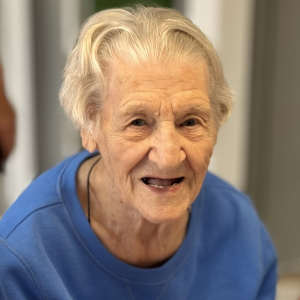
“All of these services work together to support Marvel’s (pictured left)needs and mine. It helps me function better [as a caregiver] so I can make sure she gets the care she needs.”
Jeanette
In the 10 years Marvel has been enrolled in ESP, her home health aide, Kevin, has been the one constant. Because Marvel requires 24/7 care, “[Kevin] being here is the only time I can get out of the house,” Jeanette said. “We feel as if he is one of the family.”
Jeanette appreciates all the services Marvel is able to receive at home. “All of these services work together to support Marvel’s needs and mine,” she said. “It helps me function better [as a caregiver] so I can make sure she gets the care she needs.”
“Everyone else still works,” Jeanette said. “When I ask for help, everyone is too busy. That’s why your services are a lifeline for me.”
Editor’s Note: Marvelous Marvel passed away Spring 2026.
After two years of study and a successful pilot, Council on Aging (COA) introduced a new cost sharing model for Warren County ESP in 2025, with the goal of simplified predictable billing and payment for clients who live on a fixed income and better reflecting the financial realities of older adults.
Cost sharing has always been part of ESP, with 100% of cost share payments reinvested into the program, enabling it to serve more individuals. The cost sharing income is an important revenue source for the program to continue providing services to a growing population with increasing needs.
Under the previous model, cost sharing was calculated as a percentage of actual monthly service costs for each client. Income, and out of pocket medical expenses were included in the calculation. This resulted in fluctuating monthly bills for clients, driven largely by changes in service use and provider billing cycles.
The model also failed to consider key financial factors such as housing costs or liquid assets such as an IRA or mutual funds. Meanwhile, medical expenses were fully deductible, requiring extensive documentation even though only a small percentage of clients qualified for this deduction.
“These fluctuations and complexities made it hard for older adults on fixed incomes to plan,” said Ken Wilson, COA’s chief program officer. “It also created administrative challenges that took time away from client care.”
COA worked with the Livewell Collaborative to identify areas for improvement in the model. The new model incorporates streamlined steps and improved calculation methodology to ensure a proper cost share amount based on a client’s economic means to contribute towards the cost of the services they are receiving.
The new model replaces percentage-based monthly fluctuations with a flat, predictable monthly cost share amount set at enrollment. A new tool allows case managers to calculate the cost share in real time, reducing back and forth with clients.
The flat monthly payment is not based on the client receiving 100% of their scheduled services. Rather, it accounts for fluctuations that typically occur in a client’s care, such as missed appointments due to illness, hospitalizations or provider staffing.
If a client’s service needs, income or assets change significantly during the course of their enrollment, cost sharing payments are reevaluated to reflect those changes.
A pilot of the new cost sharing model demonstrated notable improvements. The percentage of clients contributing to cost share rose from 26% to 46%, while the average monthly amount collected increased from $56.15 to $114.46. Asset adjustments—which more accurately reflect ability to pay—increased from 2% to 11%.
At the same time, deductions for excessive medical and housing costs became more targeted, affecting only clients with significant burdens. Approximately 10% of applicants qualified for a housing hardship deduction, and 7% qualified for medical expense considerations under the pilot.
The new model provides:
- Predictable monthly costs for clients – a benefit for older adults living on fixed incomes – and higher cost share revenue to reinvest into ESP services, allowing the program to serve more people.
- More equitable treatment that accounts for housing costs, health expenses and financial resources.
- Reduced administrative burden for clients and staff through streamlined processes and fewer requests for medical receipts and documentation.
The new model went into effect in all counties on Oct. 1, 2025. More than 1,200 ESP clients across Butler, Hamilton, Warren and Clinton counties were transitioned to fixed cost share amounts based on their payment history.
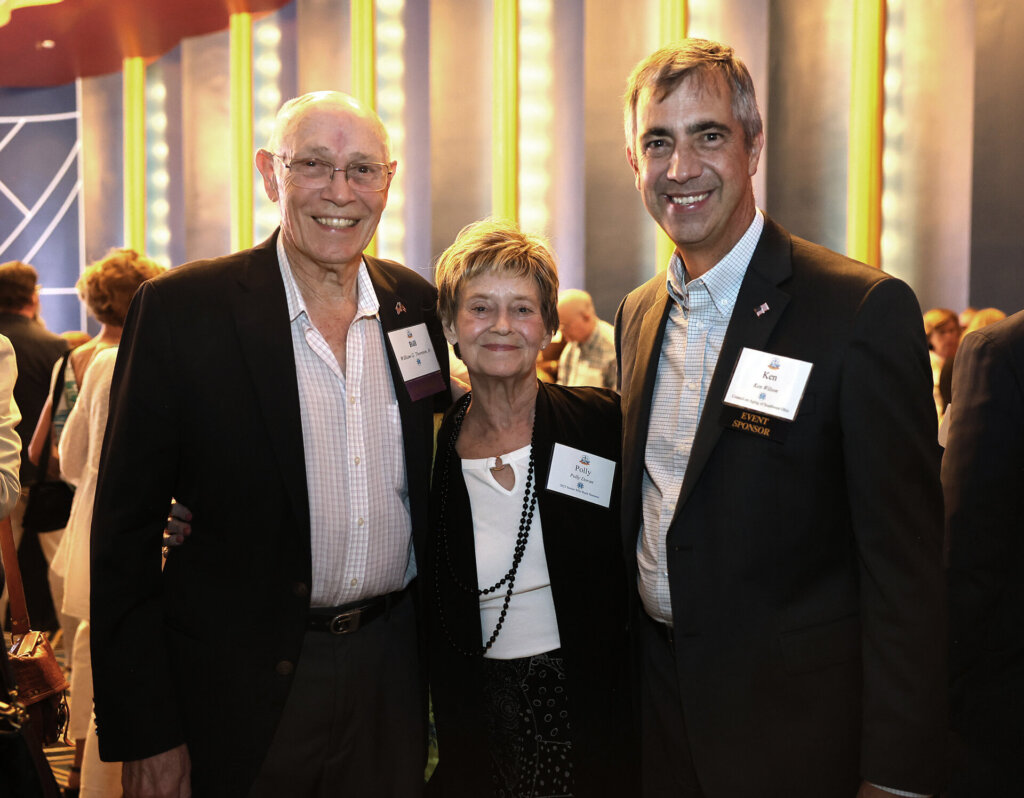
In 2025, Council on Aging nominated long-time Warren County resident and advocate, Bill Thornton, for Pro Seniors’ annual Seniors Who Rock awards. Thornton was one of three award winners honored at a ceremony in August, and he had the crowd in tears with his acceptance speech. “For nearly 20 years, Bill has been a tireless advocate for Council on Aging and those we serve,” said Council on Aging CEO Suzanne Burke. “In fact, I would say he’s our Number One advocate! Bill understands our business needs as an organization, as well as the needs of older adults in our region. His knowledge and passion have contributed to countless advocacy victories for our region and our state. Bill truly is a Senior Who Rocks!” Thornton also received the President’s Award at COA’s 2025 Annual Meeting and Awards program.
Based on his experience as a volunteer at the Lebanon Food Pantry, Warren County resident Jerry Harrod set out to create a resource to help his fellow neighbors in need. Click here to read more about this and other resources that can help individuals connect to programs and services to meet a variety of needs.
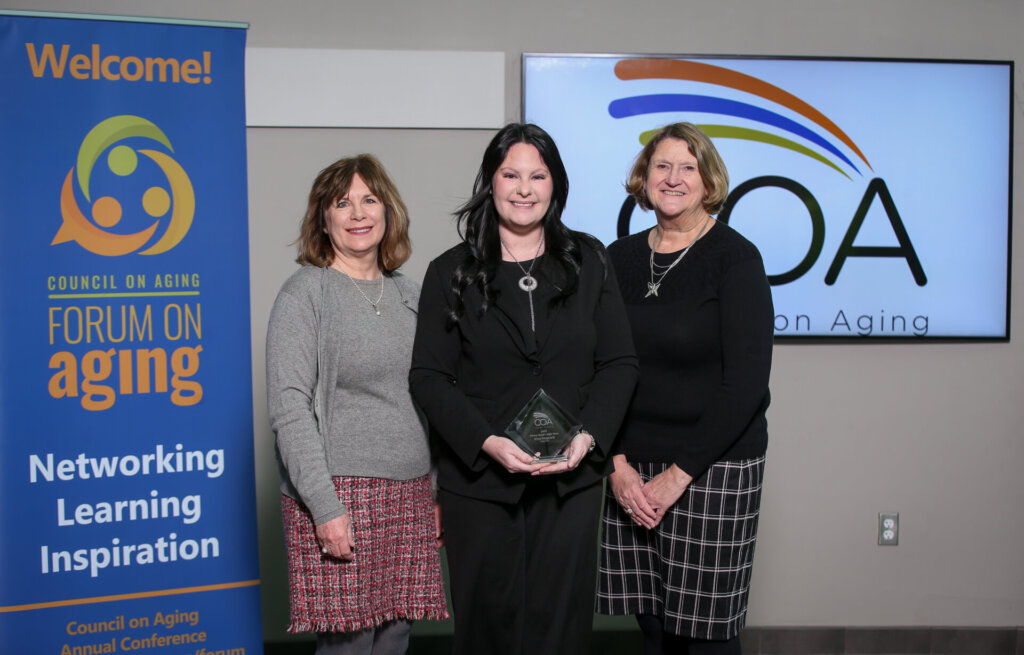
During its 2025 Annual Meeting and Awards Ceremony, Council on Aging presented a Home Health Aide Hero award to Warren County resident Erica Fitzgerald. Fitzgerald provides care through AddnAide, an app created by COA to help grow the local homecare workforce. Erica was nominated by the daughter and caregiver of a Warren County ESP client who shared, “Erica has become a member of the family and has a particular knack for anticipating everyone’s needs before they even arise.”