
2025 Clinton County ESP Annual Report

Below are the full success and client stories from the 2025 Clinton County ESP Annual Report. These stories illustrate the impact ESP has on older adults and caregivers in Clinton County.
Click here to view the program’s 2025 annual report. To request a paper copy, email us.
Success Stories
The old adage, “it takes a village,” is often used when referring to childrearing, but the saying also applies to looking out for neighbors as we age.
That’s what is happening in a small senior living community in Wilmington where Ruth Ann, 87, helps several of her neighbors, including Linda and Tim, get home care assistance help through Clinton County ESP. Ruth Ann and her friends are using a unique feature of the program called consumer directed care (CDC).
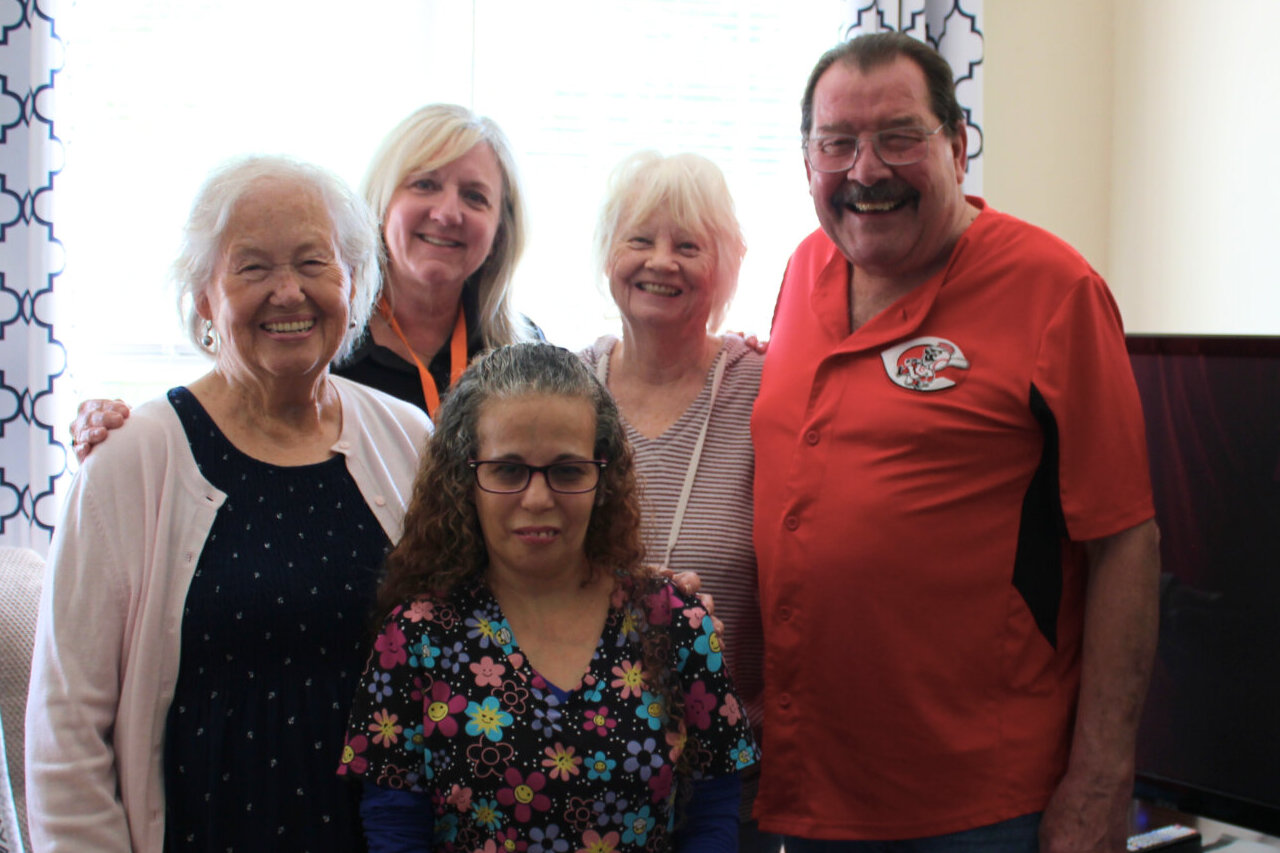
Here’s how it works: Instead of using a home care agency, clients like Ruth Ann can become an “employer” and hire their own “employee” to provide certain authorized services, which are paid for by ESP. CDC increases independence and program satisfaction for clients, while using ESP resources more effectively.
Ruth Ann’s ESP care manager, Carla, told her about this option and also recommended someone she could hire – Helen, an aide who was already providing care for other ESP clients.
“I always recommend to my clients that they interview an aide before they hire them,” said Carla. “It’s important to make sure the match is a good fit for both parties.”
Ruth Ann met with Helen and the women decided it was a good fit. As Helen’s employer, Ruth Ann sets her own care schedule, monitors Helen’s work and then reviews and approves her timecards through an online system. She received training on the system before Helen started working.
The help is important to Ruth Ann’s quality of life because she has a heart condition which makes it difficult to manage everyday tasks on her own. And, she no longer drives. Helen helps with cleaning and drives Ruth Ann to appointments, to the grocery store and to pick up prescriptions.
“She cleans like a tornado,” Ruth Ann said. “Helen comes in and has a plan. She doesn’t need help or direction. She just gets it done.”
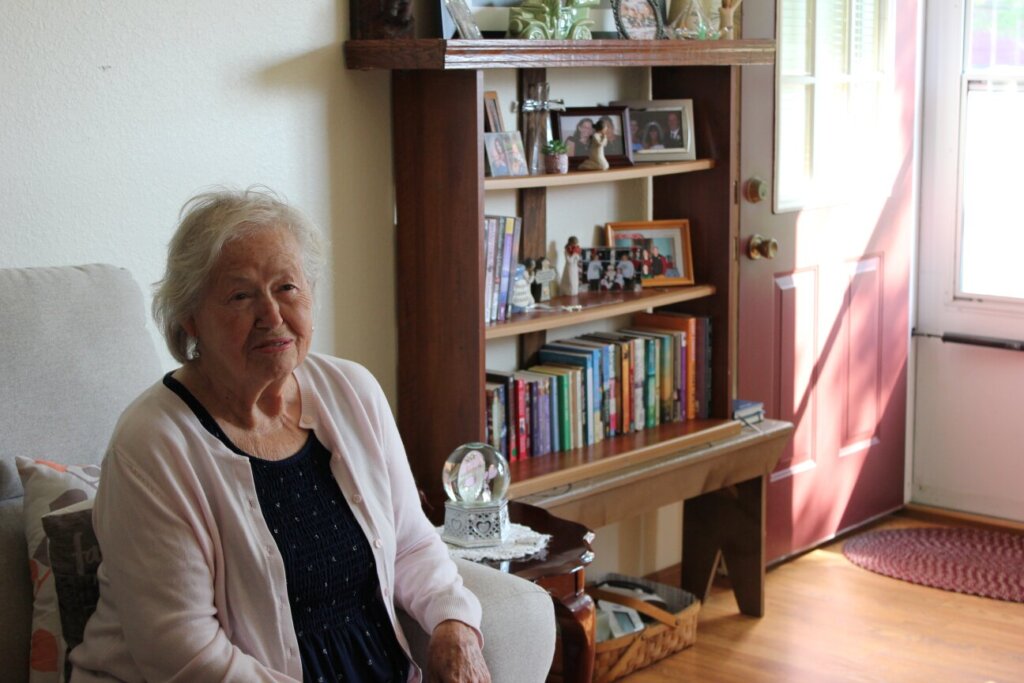
“Seniors need all the help they can get. We have to have this program for us. We have to.”
Ruth Ann, ESP client
CDC employees like Helen can provide care to more than one ESP client. Ruth Ann was so pleased with Helen’s work ethic and results, she decided to introduce her to a few neighbors in the community.
Tim, 74, had been managing chores like housekeeping, on his own, until he hurt his back cleaning his shower. He also has COPD, so everyday tasks can easily tire him out. His sister suggested he inquire about ESP.
Tim enrolled and received home care assistance through a home health agency. But, during a conversation at the mailbox, Tim shared with Ruth Ann that he would be losing his home care worker.
“Ruth Ann introduced me to Helen, and we went from there,” said Tim. “If somebody tried to take her away, I’d fight them.”
Tim said he could not do the cleaning without help. “[Helen] goes the extra mile.”
Another neighbor, Linda, had enrolled in ESP after chores like vacuuming became too difficult to manage on her own. “I’m 81 years old. It caught up with me!”
After enrolling in ESP, Linda had a difficult time finding a home care worker who could meet her needs. Ruth Ann introduced her to Helen and in her words, her house has “sparkled” ever since.
CDC allows clients who use the service to designate someone to manage their employee on their behalf. Ruth Ann, who is more tech savvy than her friends, takes on this task for Linda, Tim and several other neighbors in the community.
Ruth Ann, Tim and Linda all use words like fabulous, honest and respectful to describe Helen and her work ethic. They also agree that their “village,” including Helen, their care manager Carla, and ESP in general, all make a big difference in their quality of life and ability to live independently.
For Helen, the work is personal. She is the primary caregiver for her adult son and appreciates that she has control over her schedule. She also understands the value of the support she provides and takes pride in work.
“I love my job,” Helen said. “You have to love your job so you can get up and go to work every day. For me, I don’t treat [my clients] as clients – I treat them like my family.”
ESP is funded by the county’s senior services tax levy, which must be approved by voters every few years to continue. The program helped more than 640 eligible older adults in the county access services that help them remain independent in their homes and communities in 2025. Later in 2026, county voters will likely be asked to renew the existing levy, so Ruth Ann, Linda, Tim and hundreds of others can continue receiving services through the program.
Asked what they would tell people about ESP and the senior services levy, they had this to say:
“As far as Council on Aging goes, it’s really been a blessing for older people to have [ESP] because, you know, you just kind of get lost in your life when you’re this age,” Ruth Ann said. “You have to sit here and do nothing. When you’ve got Council on Aging working with you, you’ve got people coming and going. They bring the meals, they clean the house, they take you places. So, you’re always around people. When you’re almost 90 years old, you need somebody.”
“I agree 100%,” said Tim. “Without these services, we would really be hurting. The help that they provide and the services – we can’t do without them.”
Barbara, 70, has experienced some life-altering changes in recent years. She lost her husband in 2017 when the couple lived in Georgia. The northern Indiana native moved back there afterward to be near family. While in Indiana, she suffered a stroke, so next she moved to Wilmington to be close to her daughter.
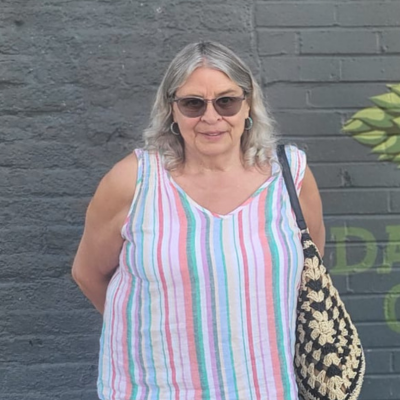
“I’m lucky. I have good kids,” Barbara said. Her son and daughter have always helped when she needed it. But “I try to stay as independent as I can,” she said.
She purchased her home in Wilmington in 2022 and continued to recover from the stroke, using a cane when needed for balance. When her daughter shared a Facebook post about the Clinton County Older Adults Home Modification Program, which is administered by Council on Aging (COA), Barbara applied, knowing there were a few areas where the safety in her home could be improved.
The program is funded by a Housing and Urban Development grant that provides no-cost home modifications to county residents who are 62 and older, own their home and its land and meet income guidelines. Its goal is to help individuals age in place as long as possible.
COA confirmed Barbara met the program qualifications, and an occupational therapist visited her to complete an evaluation. While Barbara was hopeful she might receive a chair-height toilet and new porch railings to improve her safety, the plan changed once a contractor looked at her bathroom.
Unbeknownst to Barbara, a water leak in the plumbing under the bathroom had left the floor in bad shape. “The lady who was in the house before me was in her 90s, so who knows how long the leak was there,” Barbara said. “I’m so glad I didn’t fall through the floor.”
With the leak fixed and a new floor in place, Barbara feels very grateful to have found the program. “They saved me a lot of money,” she said. “And I didn’t have to do anything.”
If anyone was unsure about whether to apply to the program, “I would tell them that it’s easy to do. It’s only a phone call. They walk you through everything you need to do,” Barbara said. “It’s almost silly not to look into it.”
After two years of study and a successful pilot, Council on Aging (COA) introduced a new cost sharing model for Clinton County ESP in 2025, with the goal of simplified predictable billing and payment for clients who live on a fixed income and better reflecting the financial realities of older adults.
Cost sharing has always been part of ESP, with 100% of cost share payments reinvested into the program, enabling it to serve more individuals. The cost sharing income is an important revenue source for the program to continue providing services to a growing population with increasing needs.
Under the previous model, cost sharing was calculated as a percentage of actual monthly service costs for each client. Income, and out of pocket medical expenses were included in the calculation. This resulted in fluctuating monthly bills for clients, driven largely by changes in service use and provider billing cycles.
The model also failed to consider key financial factors such as housing costs or liquid assets such as an IRA or mutual funds. Meanwhile, medical expenses were fully deductible, requiring extensive documentation even though only a small percentage of clients qualified for this deduction.
“These fluctuations and complexities made it hard for older adults on fixed incomes to plan,” said Ken Wilson, COA’s chief program officer. “It also created administrative challenges that took time away from client care.”
COA worked with the Livewell Collaborative to identify areas for improvement in the model. The new model incorporates streamlined steps and improved calculation methodology to ensure a proper cost share amount based on a client’s economic means to contribute towards the cost of the services they are receiving.
The new model replaces percentage-based monthly fluctuations with a flat, predictable monthly cost share amount set at enrollment. A new tool allows case managers to calculate the cost share in real time, reducing back and forth with clients.
The flat monthly payment is not based on the client receiving 100% of their scheduled services. Rather, it accounts for fluctuations that typically occur in a client’s care, such as missed appointments due to illness, hospitalizations or provider staffing.
If a client’s service needs, income or assets change significantly during the course of their enrollment, cost sharing payments are reevaluated to reflect those changes.
A pilot of the new cost sharing model demonstrated notable improvements. The percentage of clients contributing to cost share rose from 26% to 46%, while the average monthly amount collected increased from $56.15 to $114.46. Asset adjustments—which more accurately reflect ability to pay—increased from 2% to 11%.
At the same time, deductions for excessive medical and housing costs became more targeted, affecting only clients with significant burdens. Approximately 10% of applicants qualified for a housing hardship deduction, and 7% qualified for medical expense considerations under the pilot.
The new model provides:
- Predictable monthly costs for clients – a benefit for older adults living on fixed incomes – and higher cost share revenue to reinvest into ESP services, allowing the program to serve more people.
- More equitable treatment that accounts for housing costs, health expenses and financial resources.
- Reduced administrative burden for clients and staff through streamlined processes and fewer requests for medical receipts and documentation.
The new model went into effect in all counties on Oct. 1, 2025. More than 1,200 ESP clients across Butler, Hamilton, Warren and Clinton counties were transitioned to fixed cost share amounts based on their payment history.
There’s a new option available for Clinton County ESP clients who need help with a common need – laundry. Council on Aging (COA) recently began partnering with Anytime Laundry, based in Wilmington, to provide laundry delivery service for eligible clients.
“As we age, our health and our home can conspire to make a routine task like laundry more difficult,” said Ken Wilson, chief operating and programs officer at COA. “A disability or chronic health issue, location of laundry appliances within the home, or the inability to drive to a local laundromat can make it difficult to manage laundry independently.”
COA first began offering laundry delivery service in its FastTrack Home and ESP programs in 2022 in counties impacted by the national home health aide shortage. The service has received high satisfaction ratings from clients and is also saving money in programs funded by local tax dollars.
“We’ve been fortunate in Clinton County that the home health aide shortage has not had a significant impact on our ability to meet clients’ needs,” Wilson said. “But the laundry service has been popular in other parts of our service area, and it helps us serve more people at a lower cost. Our biggest barrier to offering the service in Clinton County was finding a local provider.”
In 2024, enrollment in the laundry delivery service across COA’s region grew 51% while costing more than $100 less per client than the same service provided by a home health aide. Feedback from clients was also positive, with more than 97% of participants reporting total satisfaction with the service, citing convenience, improved independence and positive impacts on their daily life.
“I had a stroke and was able to go home [from the hospital], but I was unable to do laundry due to loss of function,” one participant shared. “This service allowed me to be home.”
Council on Aging began searching for a laundry partner in Clinton County in 2024 and found a willing partner in Robin Britain, owner of Anytime Laundry and Carwash.
Britain and her husband, Larry, had owned Anytime Laundry for seven years, but it was only within the last year that they started advertising laundry delivery service. Besides ESP clients, the service is available to people within a 20-miles radius of Anytime’s two Wilmington locations. According to Britain, that pretty much covers the entire county.
Via a contract with COA, Britain and her team will pick-up, wash, dry, fold and return ESP clients’ weekly laundry. Dirty laundry is collected on a designated day in a receptacle provided by Anytime Laundry – usually from the client’s porch or stoop – and returned cleaned and folded within 48 hours.
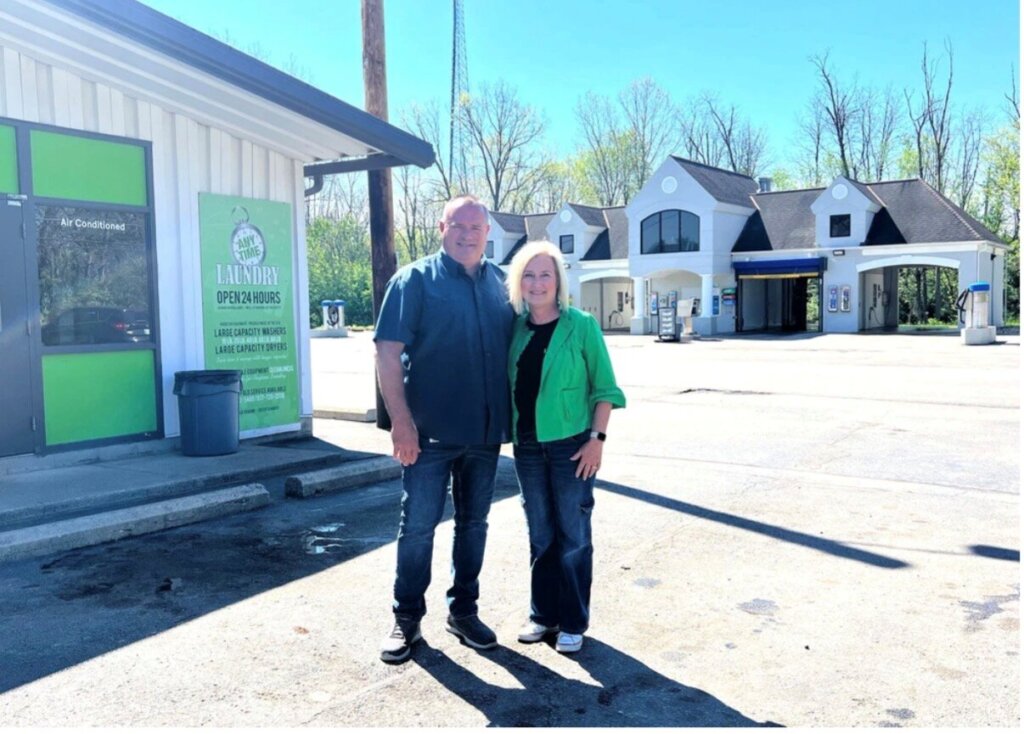
“I’m excited to get started. It’s a way for us to give back to the community.”
Robin Britain, Anytime Laundry
Britain said people can be apprehensive about using a laundry delivery service – they worry about how their clothes will be separated and washed and what detergent will be used. But, Britain said her team works with clients to meet their needs – including washing towels and linens, hanging or line-drying items, and using requested detergents or products.
And, working with older adults is nothing new for Anytime Laundry. The team already provides delivery service at area nursing homes, where residents appreciate the flexible pick up and delivery dates.
A lifelong resident of Clinton County, Britain and her family now live on the farm she grew up on in New Vienna. Her dad lives with the family part-time.
Clinton County ESP clients who are interested in laundry delivery service can speak to their care manager to determine if the service is right for them. To learn more about Clinton County ESP, click here or call (937) 584-7200. Click here for more information about Anytime Laundry.
Grants funded by the county’s senior services tax levy were awarded to three county senior centers to help fund maintenance and safety-related projects.
At the New Vienna Community Center, which is used by older adults in the community, $21,500 was awarded to replace an HVAC system that was installed in 1970. According to Rusty Hatter, a staff member at the center, the existing system was only 60% efficient and one of the two units was inoperable.
“Everyone we had look at these units said they have exceeded their life expectancy,” Hatter said. “If we are not able to replace them, we will not be able to keep the community center open.”
Hatter said the center provides county older adults with monthly meals, as well as an ADA equipment loan program for those in need. The center also offers area families space for end-of-life celebrations.
The Clinton County Community Action Program was awarded two grants totaling $34,490 for concrete replacement and parking lot resurfacing at it’s Aging Up Center. Jane Newkirk, the center’s director, said the center has worked to maintain 25-year-old parking lot by making patch repairs and sealcoating to protect the asphalt. After soliciting several bids and recommendations for extending the life of the parking lot, Newkirk said the decision was made to resurface the lot. Thanks to the grant funding, this work was completed in 2025.
Additionally grant funding was used to replace a concrete ramp that leads from the building’s kitchen to the back parking lot. The ramp was 25 years old and had undergone several patches over the years but had deteriorated beyond repair. According to Newkirk, the ramp is a key entry and exit point for staff who are loading home delivered meals and bringing in congregate meal supplies.
Finally, the Blanchester Senior Center received a $5,750 grant to remove several trees around the property that had become a safety hazard for the building and its visitors. According to Trustee Ron Voris, the senior center building was constructed in 1994 and the trees surrounding the property were already well-established at that time. Recent storms have caused damage to the trees, requiring clean up on the property and additional safety concerns. In 2025, the granted helped pay for the removal of three large trees and pruning of others.
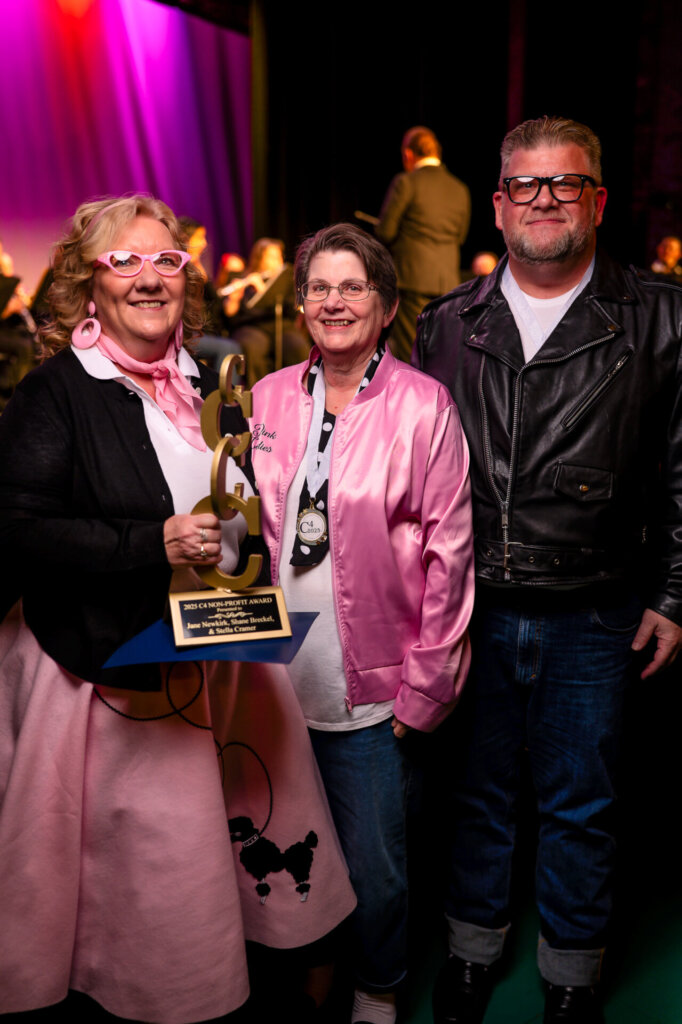
Presented by the Clinton County Convention and Visitors Bureau and the Wilmington-Clinton County Chamber of Commerce, Jane Newkirk and Shane Breckel received a Clinton County Community Champion (C4) award in the annual award program’s non-profit category. Newkirk and Breckel were nominated by Council on Aging for their leadership at the Aging Up Community Center and helping to serve a vital and growing need for older adults in the county.