Council on Aging 2025 Impact Report
Below are the full stories from Council on Aging’s 2025 Impact Report. Click the links below to jump directly to the article you wish to read.
Butler County voters approve first senior services tax increase in 20 years
At 106, Warren County resident proves you’re never too old to live independently
Advocacy vital for protecting and growing programs and services for older adults
Grants and awards recognize COA’s commitment to innovation and service; help expand services
COA embraces experience, collaboration to guide successful transition to Next Generation MyCare
home52 Transportation, ESP, keep Cincinnati grandmother moving
Trenton widow regains independence with help from COA program
Butler County voters approve first senior services tax increase in 20 years
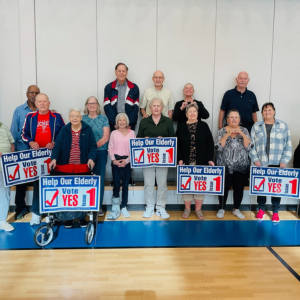
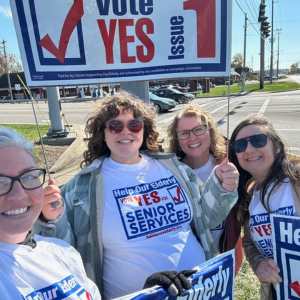
Butler County’s senior services tax levy – Issue 1 – was approved by 55% of voters on Nov. 4, 2025. The levy was a renewal of the existing 1.3.mil levy and an increase of .7 mil. It was the first time in 20 years Butler County voters were asked to approve an increase in the senior services levy, despite 79% growth in the county’s 60 and older population during the same time period.
The combined levy will cost taxpayers an additional $24.50 per $100,000 of value, for a total cost of $50 per $100,000. The levy will generate $20.2 million annually.
“Everyone who is part of this program is grateful to the voters and taxpayers of Butler County,” said Ken Wilson, chief program officer at Council on Aging. Council on Aging administers the levy via a contract with Butler County Commissioners. “We knew it was a difficult time to ask voters for more money, but a renewal of the existing levy would have required drastic changes to the program, leaving a big gap between the number of people who need help and the number of people we are able to serve.”
The senior services levy provides more than 84% of funding for Butler County ESP, which helped nearly 4,000 county residents age 60 and older remain safe and independent in their homes in 2025. ESP helps older adults with activities of daily living, including bathing, cleaning, cooking, and transportation, while also filling gaps in care that may already be provided by family caregivers.
Since the levy’s last increase in 2005, the number of people age 85 and older in Butler County (those most likely to need care) has increased 52%. As the program’s administrator, Council on Aging has worked hard to keep costs down. Despite 62% inflation during this period, and rising program costs, the cost of care per client in ESP has increased only 18% (or $66) in 20 years.
Beginning in February 2024, enrollment into ESP was limited to focus on individuals most in need, including cancer and dialysis patients, adult protective cases and a few others. While this helped to manage costs, it also meant turning away hundreds of people who would otherwise have been eligible for the program.
With passage of the levy, enrollment restrictions have already been lifted and ESP is beginning to close the gap between the needs of the community and program capacity. By 2030, ESP will be serving nearly 20% more people than it is today.
At 106, Warren County resident proves you’re never too old to live independently
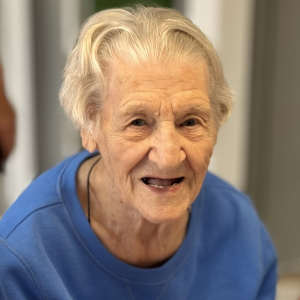
Warren County ESP client, Marvel – affectionately known by all as Marvelous Marvel – lives in Maineville with Jeanette, her niece and caregiver. Marvel celebrated her 106th birthday in 2025.
A descendant of one of the region’s original settlers and Revolutionary War soldier, Jacob Rich, Marvel spent most of her life as a farmer, breeding blue-ribbon cows with her husband, Lonnie, and selling hay to area farmers.
A real-life Rosie the Riveter, Marvel worked at a factory along the Little Miami River during WWII assembling canned heat containers for the military.
Many things have changed in Marvel’s lifetime. For example, she paid 25 cents to get her first driver’s license, never had to take a driving test and continued driving into her nineties.
In fact, it was in her mid-90s when Marvel decided she should hang up her car keys. She reached out to the county’s transit system for help getting where she needed to go. Soon after, she fell and broke her hip, got connected to Warren County ESP and began receiving home-delivered meals. Later, ESP provided an emergency response system and home care assistance (an aide to help with housekeeping, personal care and respite).
With support from ESP, Marvel continued to live alone until age 101 when Jeanette moved in with her. It was during the pandemic and Marvel had been diagnosed with kidney cancer.
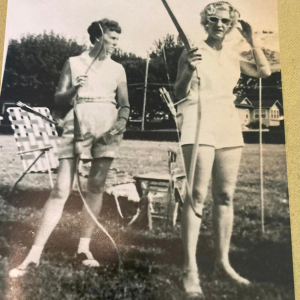
The two have made good use of their time together, writing and publishing a book, Hunting Wildflowers, which is based on Marvel’s childhood memories and letters written to her grandfather during the Great Depression. Jeanette said the book has resonated with people in the community, helping them connect to shared memories of small-town life and serving as a reminder of why community roots still matter.
Since moving in with her aunt, Jeanette has had to manage a host of programs and services that help Marvel remain independent at home. “I wasn’t planning on this,” she said. “It just happened. But because of the support Marvel receives, I was able to step up to the plate.” That support now includes hospice care. She has also received physical therapy and once even had an in-home x-ray.
In the 10 years Marvel has been enrolled in ESP, her home health aide, Kevin, has been the one constant. Because Marvel requires 24/7 care, “[Kevin] being here is the only time I can get out of the house,” Jeanette said. “We feel as if he is one of the family.”
Jeanette appreciates all the services Marvel is able to receive at home. “All of these services work together to support Marvel’s needs and mine,” she said. “It helps me function better [as a caregiver] so I can make sure she gets the care she needs.”
“Everyone else still works,” Jeanette said. “When I ask for help, everyone is too busy. That’s why your services are a lifeline for me.”
Advocacy vital for protecting and growing programs and services for older adults
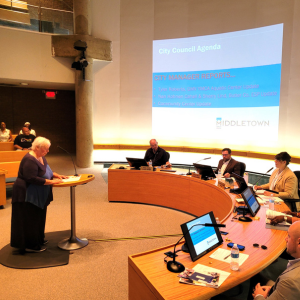
With most of its funding for programs and services provided through state and local governments, it is crucial for Council on Aging (COA) to educate elected officials and the community at large about the issues affecting older adults. This is why one of the agency’s most important functions is advocacy on behalf of older adults.
Levy renewal in Buter County
In November 2025, a renewal of the Butler County Senior Services Levy – which provides most of the operating funds for the Butler County ESP program – was on the ballot. Due to the county’s growing aging population and rising costs, levy funds were stretched thin and the program was unable to provide services to all older adults in need. Levy dollars had not increased in 20 years, and research confirmed an increase would be needed to effectively serve the community.
However, a state-mandated triennial update of property values in 2023 sharply increased property taxes for many in the county. “The senior services levy is assessed based on property value, although it’s only a small portion of a homeowner’s overall property tax bill,” said Nan Cahall, COA’s director of government relations. “But we recognized that educating community leaders and residents would be critical for levy passage because many were feeling the pinch of property taxes.”
COA enlisted the help of Butler County ESP Advisory Council members, who together with COA staff members, spoke to more than 60 community organizations about the positive impact of levy-supported programs on older adults, caregivers and the overall community. “We stressed that if the levy did not pass, there was no replacement for the funds and programming would end,” Cahall said.
“The levy passed with 55% of voters saying ‘yes’ to the increase,” she said. “We were able to end managed enrollment in ESP and FastTrack Home, a levy-funded transitional care program. and now more older adults in Butler County will receive the help they need to remain safely in their homes.”
Connecting with legislators
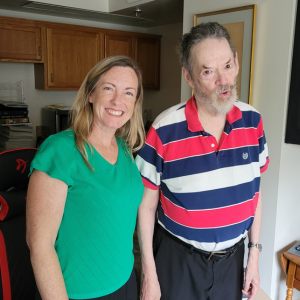
Cahall and members of COA’s Board of Trustees’ Community and Government Relations Committee met with legislators throughout the year, including with State Rep. Adam Bird. They also arranged client home visits, one of the most impactful ways to educate legislators about issues facing older adults.
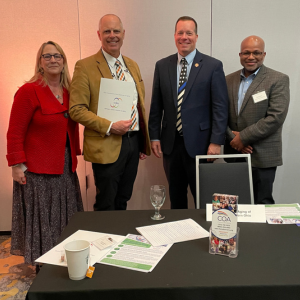
State Rep. Rachel Baker said, “Visits like this are so helpful because they help me keep things in perspective when I’m looking at a 5,000-page budget document. They help me put a face to the numbers and see firsthand the impact of home- and community-based services on people here in our communities.” State Representatives Thomas Hall and Dani Isaacsohn also visited clients in their homes during 2025.
A group of state legislators representing Hamilton County toured the new PACE of Cincinnati (Program of All-inclusive Care for the Elderly) day health center, which opened Sept. 1, 2025, in Norwood. COA and the TriHealth health system partnered to bring this different model of care for older adults to Hamilton County.
Year-round advocacy
Year-round, Cahall and other COA leaders work closely with staff at the Ohio Association of Area Agencies on Aging (o4a) and fellow Ohio Area Agencies on Aging to advocate on behalf of older adults across the state. And, again in 2025 the COA team participated in o4a’s annual advocacy conference.
Grants and awards recognize COA’s commitment to innovation and service; help expand services
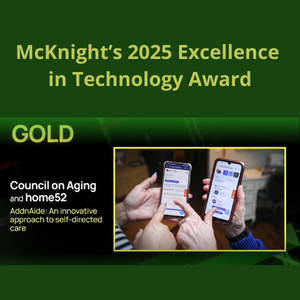
In 2025, Council on Aging received national recognition for two of its innovative programs; both of which the agency developed to alleviate challenges to serving its clients due to a national home health aide workforce shortage. In addition, COA subsidiary home52 secured a number of grants, allowing it to fill gaps in transportation availability for older adults in portions of its service area.
AddnAide recognized by McKnight’s
AddnAide received the gold award in the Homegrown category of McKnight’s 2025 Excellence in Technology awards. McKnights’ Homegrown award category recognizes operators that have independently developed and implemented a technology-driven improvement that enhances care and/or the bottom line.
COA subsidiary home52 developed AddnAide to address a care crisis occurring locally – and across the country. Home health aides were leaving jobs with traditional home health agencies, while the demand for their work was increasing with the aging population. AddnAide helped address this critical problem by tapping technology to connect people who have the desire to manage their own care with a broader community of care providers. This helped COA and other organizations overcome service delivery challenges while lowering costs and improving outcomes.
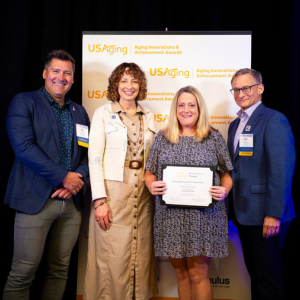
COA named recipient of prestigious Aging Achievement Award from USAging
COA’s Laundry Delivery Service received a USAging 2025 Aging Achievement Award, one of the highest honors presented by USAging to its members. The award recognizes members that have found new and innovative ways to support older adults, people with disabilities and caregivers as they live in their homes and communities.
Faced with long waiting lists due to the national home health aide shortage and lingering effects of the COVID-19 pandemic, COA sought and found an innovative, cost-effective solution to meet a common need among older adults enrolled in COA’s FastTrack Home and ESP programs. Local laundry providers manage pickup, cleaning, folding and delivery of clients’ weekly laundry. The service meets a critical need for older adults who cannot do their own laundry due to a disability or chronic health condition. It helps older adults remain independent, redirects home health aides to more intensive services or clients, reduces costs and receives high satisfaction marks from participants.
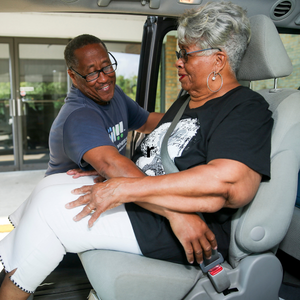
home52 Transportation grants help expand services to additional users
In 2025, home52 received five grants totaling more than half a million dollars, which are enabling the continued operation and expansion of services offered by home52 Transportation. home52 received grants from the following organizations:
- Carol Ann and Ralph V. Haile, Jr. Foundation
- Millstone Fund
- John A. Schroth Family Charitable Trust
- OKI Regional Council of Governments
- Craig H. Neilsen Foundation
- Grant from a private family foundation
home52 Transportation manages multiple transportation providers through a centralized transportation coordination system, providing specialized, on-demand and advance-scheduled trips for older adults and people with disabilities. Its services fill a gap that exists when local transportation networks can’t meet these unique needs, improving the ability of older adults and those with disabilities to access healthcare and remain active in their communities.
Grant funding fosters program growth, and allows home52, in certain cases, to offer no-cost rides to older adults and individuals with disabilities in COA’s service area.
In 2025, grant funds permitted the expansion of no-cost transportation services into Clermont County.
COA embraces experience, collaboration to guide successful transition to Next Generation MyCare
When the Ohio Department of Medicaid (ODM) announced several years ago it would transition to a new iteration of MyCare Ohio, and as program details became available, Council on Aging (COA) leadership recognized opportunities to leverage its 12 years of experience with the program and strong statewide relationships to set up its transition for success.
MyCare Ohio launched in June 2014, bringing significant changes to the long-term care landscape in the state. MyCare Ohio pulled long-term care services previously administered by Ohio’s Area Agencies on Aging (AAAs) into a single managed care program for Ohioans who receive both Medicare and Medicaid benefits. Through MyCare Ohio, all health and long-term care needs were coordinated through a state-approved managed care organization (MCO).
Twenty-nine of Ohio’s 88 counties – including those in COA’s service area – participated in MyCare Ohio. On Jan. 1, 2026, ODM launched Next Generation MyCare in counties that participated in MyCare Ohio and will begin rolling out the program to the remainder of the state beginning on April 1, 2026.
“When MyCare Ohio launched in 2014, it was new for everyone involved,” said Council on Aging CEO Suzanne Burke. “But with 12 years of providing waiver service coordination to MyCare members under our belts, we had ideas about how to build on the success of the original program when it came to the role of the AAAs.”
COA’s transition preparation ran on parallel tracks: Preparing COA staff – including for the significant change of working with four MCOs in Next Generation MyCare rather than just two in MyCare Ohio – and working with external partners to define as precisely as possible the AAAs’ role in the program. COA and most other AAAs provide waiver service coordination in Next Generation MyCare – determining level of care required and managing members’ long-term care services and supports.
COA led a coalition of Ohio’s AAAs during months of negotiations with the MCOs – Anthem Blue Cross and Blue Shield, Buckeye Health Plan, CareSource and Molina Healthcare of Ohio – to come to an agreement outlining how the AAAs and MCOs would work together in Next Generation MyCare.
“I’m confident the final agreement will benefit everyone,” Burke said. “Staff at the AAAs and the MCOs will have clearly defined responsibilities. This will result in more efficient and effective operations, all with the goal of quality and seamless service for members.”
Having clearly defined responsibilities for waiver service coordinators – those who work directly with members – made it more straightforward for COA to assemble and train its Next Generation MyCare team, which represented a large portion of the internal work involved. In addition to the waiver service coordinators, most of the rest of COA’s staff was in some way involved in transition planning and implementation.
“Preparation for the transition required a significant time investment by nearly every department at COA, but it has been well worth it to ensure members will experience the best waiver service coordination possible,” Burke said.
home52 Transportation and ESP keep Cincinnati grandmother moving
Juanita doesn’t like to sit still. She worked on her feet in distribution for LensCrafters for 21 years before retiring about 10 years ago. “I like the action. I don’t like to sit down all day,” she said.
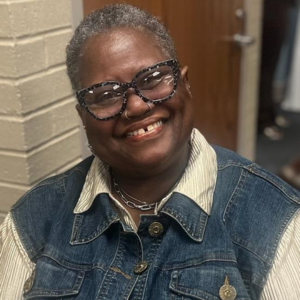
Participating in Bingocize helped the widow, 71, keep moving. The workshop is one of Council on Aging’s (COA) free health and wellness workshops for older adults. Bingocize combines Bingo with health education. “I loved the class, I loved the exercise,” Juanita said. But she admitted her favorite part was when she got to call out “Bingo!”
She also enjoyed the no-cost rides to Bingocize provided by home52 Transportation, a service operated by COA subsidiary home52 that provides same-day and advance-scheduled transportation for riders who need specialized transportation services. Juanita’s rides to and from Bingocize were funded by a grant that home52 Transportation received to help older adults and those with disabilities to remain independent and combat isolation.
Juanita had to put Bingocize on the backburner in June 2025, when she suddenly found herself in the hospital, receiving treatment for kidney disease and heart problems she didn’t previously know she had.
Fortunately, Juanita had enrolled in Hamilton County ESP in 2023 when several known conditions had put her at risk for falls. Services including home-delivered meals, housekeeping assistance and an emergency response system, helped her maintain her independence.
But when she arrived home from the hospital in 2025, she found that getting around was even more challenging than before. She already used a cane for balance, but “because of swelling, I had to wrap my legs so I couldn’t drive. I did not like that, boy I did not like that,” she said.
ESP is flexible and care managers monitor clients, making changes to their care plans as their needs change. Juanita’s care manager, Kristy, procured a lift chair that she now uses to elevate her legs to prevent swelling. She is extremely enthusiastic about the lift chair, which has become her favorite place to relax at home, and is equally enthusiastic about the transportation services she receives as an ESP client. “The transportation is a lifesaver for me,” Juanita said. “Without it, I’d be in trouble.”
In addition to providing no-cost, grant-funded rides for those who qualify, home52 Transportation is the transportation provider for Hamilton County ESP clients who qualify, like Juanita. She uses the service for essential errands like getting to and from medical appointments, the grocery store and the laundromat.
Some children and grandchildren who live nearby help Juanita as much as possible, but they have jobs and other commitments and aren’t always available to drive her places. “This is really helping my family out too. I don’t know what they would do without these rides,” she said.
In addition to no-cost, grant-funded rides that are available to those in Hamilton and Clermont counties who qualify, home52 Transportation provides transportation for eligible clients of community partners such as Clermont County Job and Family Services and several hospital systems and medical providers. A private-pay option is available for those who don’t qualify for free service.
Trenton widow regains independence with help from COA program
On Oct. 31, 2022, Susan’s life changed forever. That was the day she had major spinal surgery and woke up not able to feel her lower body. She was told she was a paraplegic. Through her tireless work and determination, along with support from Butler County Elderly Services Program (ESP), Susan is more independent than she ever thought she could be again.
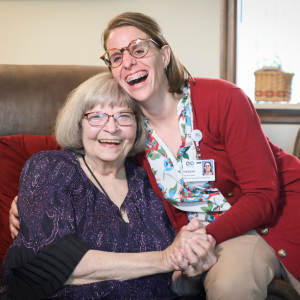
A widow after 48 years of marriage, Susan lived alone in her single story, four bedroom home in Trenton. “I was scared to go home (from the hospital),” Susan said. “I was absolutely, flat-out terrified.”
A hospital social worker mentioned that ESP may be able to help. “The minute I knew there were many things I would need help with,” Susan said, “I was making lists and phone calls – and one was to ESP.”
When she made that call, her care manager, Hannah, developed a personalized care plan and Susan’s road to recovery truly began. ESP provided an emergency response system, which she wears every day and has helped her through two falls. The 30-ft wooden ramp ESP built for her replaced a costly, rented ramp and allows wheelchair entry into her home.
ESP also provided medical transportation. “I had a lot of transportation in the beginning – wound care appointments, physical therapy sessions and countless doctor visits,” Susan remembers. It is because of all those visits that Susan gained strength and is now able to drive on her own.
Even with an extensive support network that includes three adult children, four grandchildren and many friends, Susan felt like a burden. “I didn’t want them (my children) to be off work all the time to help me,” she said. “With ESP, they can go to work every day and they’re happy to know that I have resources other than the family.”
A nurse by trade as well as an enthusiastic community theater seamstress, Susan has never hesitated to provide help to others, but accepting help was another thing altogether. “To let someone into my circle, especially a stranger, is hard for me,” Susan admits. “I don’t like to be dependent on anyone else. I am independent to an absurd degree. But she (Hannah) made me feel so comfortable about the whole thing. She has been a godsend.”
Hannah feels the same way: “Yes. She has come so far. Susan is one of the most inspirational clients I have had the privilege of working with.”